Boston Pro Locksmiths Service Team
Local locksmith team
Jul 23, 2026 12 min read
If you own a rowhouse on Marlborough Street or a condo carved out of a Victorian brownstone on Pinckney Street, chances are the lock on your front door is older than most cars on the road — and probably more complicated. Boston's Back Bay and Beacon Hill neighborhoods are full of pre-war doors fitted with hardware that confuses modern locksmiths who rarely see it anymore. The two types you're most likely to encounter are the mortise lock and the rim cylinder lock, and knowing which one you have is the first step toward getting it repaired, rekeyed, or replaced correctly.
This guide is written specifically for owners and tenants of older Boston properties. We'll walk you through how to identify each lock type at a glance, explain what can go wrong with aging hardware, and tell you exactly what a skilled locksmith can do to restore security without gutting your historic door. Whether your key is suddenly spinning in the cylinder or the whole latch mechanism feels loose in the pocket, the information below will help you have a smarter conversation before anyone picks up a screwdriver.
## What Is a Mortise Lock, and Why Do Boston Doors Have Them?
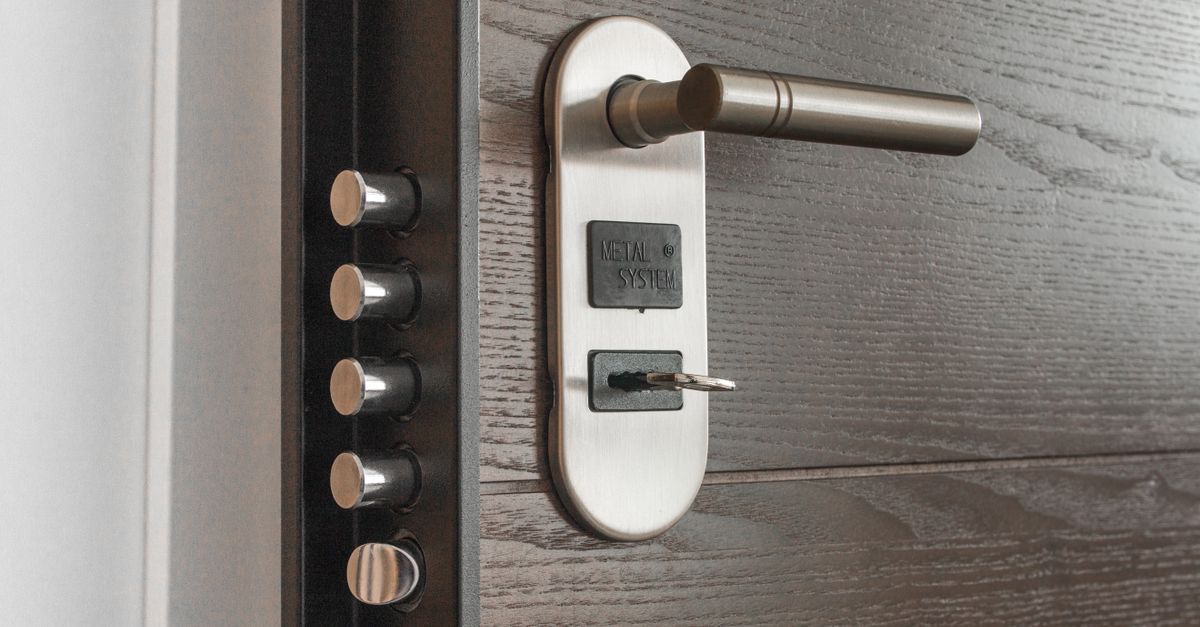
A mortise lock is a complete locking mechanism — latch, deadbolt, and sometimes a privacy thumb-turn — housed inside a single rectangular steel case that sits recessed, or 'mortised,' into the edge of the door itself. Unlike a modern cylindrical lockset where the hardware bolts onto the door surface, a mortise lock set is integrated into the door body, which is why it creates a very clean, flat appearance on the door face. You've seen them even if you didn't know the name: that tall, narrow face plate running vertically down the door edge, with a keyhole and a separate handle or knob above it, is the classic signature.
These locks became standard in American residential construction from roughly the 1880s through the 1950s — exactly the era when most of Beacon Hill and the Back Bay were built or subdivided. Builders specified them because they were robust, multi-function, and appropriate to the heavy solid-wood doors common in that period. Many of those original mortise lock sets are still in service today, which is a testament to the quality of the casting and machining. Well-known manufacturers from that era included Corbin Russwin, whose Corbin Russwin mortise lock hardware is still found on dozens of Commonwealth Avenue and Chestnut Street entries, as well as Baldwin, whose Baldwin mortise lock products were prized for their brass detailing and are often still original on high-end Beacon Hill townhouses. If your door has one of these, it is almost certainly repairable — you don't need to tear it out.
## Rim Cylinder Locks: The Other Common Hardware on Old Boston Doors
A rim cylinder lock works on a different principle. The cylinder — the part you insert the key into — mounts through the door face and connects to a case-mounted latch or rim latch on the interior surface of the door. You've likely seen the boxy, surface-mounted night latch on the inside of an old apartment door; that is the rim case, and the mortise lock cylinder that operates it sits on the outside. Rim hardware was especially popular in multi-unit buildings because it allowed landlords to rekey the exterior cylinder without dismantling the interior case, making tenant turnovers simpler.
In Boston triple-deckers and converted Back Bay townhouses with multiple units, you will often find rim cylinder locks on secondary entry doors — basement entries on Acorn Street or garden-level flats on Louisburg Square, for example. The practical difference matters when something breaks: if the cylinder seizes on a rim lock, a skilled locksmith can often remove and replace just the mortise lock cylinder without touching the rim case at all. If the rim case itself fails — a broken spring or a bent bolt — that is a separate repair. Knowing which component failed will help you describe the problem accurately when you call for service.
## How to Identify Your Lock Type in Under Two Minutes
Stand at your front door and look at the door edge — the narrow strip of wood visible when the door is open. If you see a tall face plate (usually three to six inches long) with the latch bolt and deadbolt both emerging from that same plate, you almost certainly have a mortise lock set. Open the door and look at the interior face: a mortise lock will have a flat escutcheon plate flush with the door surface, sometimes with a thumb-turn knob for the deadbolt. There will be no bulky box mounted on the interior surface.
If instead you see a boxy metal case screwed to the interior surface of the door with a spring latch or deadlatch bolt shooting out from it, that is a rim lock. The exterior cylinder will be visible on the outside face of the door, held in place by a tailpiece that connects through the door to the rim case. A third possibility — common on exterior back doors added during mid-century renovations — is a standard cylindrical lockset, the familiar door knob lock with a deadbolt above it. These are the easiest to service and the most widely available at hardware stores, but they were rarely used on the original primary entry doors of pre-war Boston homes because the doors were simply too thick and too heavy for them to operate smoothly.
## What Can Go Wrong and What a Locksmith Can Actually Fix
Age is the main enemy of mortise hardware. The grease that originally lubricated the mechanism dries out over decades, and the cast iron or brass components begin to wear against each other. The most common failure modes are: a key that turns but doesn't throw the bolt (worn cam or tailpiece), a latch that won't retract (broken spring inside the case), a cylinder that spins freely (sheared retaining screw or stripped cam), and a door that won't latch at all because the strike plate has shifted with the building's seasonal movement. All of these are repairable by an experienced locksmith without replacing the entire mortise lock set — and that matters in historic districts where maintaining original hardware may be preferred or even required by condo association rules.
Cylinder replacements are the most common mortise lock repair call we handle on older Boston properties. A mortise lock cylinder is a specific size and profile — typically a 1-inch or 1-1/8-inch format — and it must be matched correctly to the existing case. Dropping in a cylinder from a big-box store without checking the cam configuration will leave you with a key that turns the cylinder but does nothing. Our team carries a range of mortise cylinders suited to the cases found in Back Bay and Beacon Hill properties, so we can typically complete a cylinder swap in a single visit without ordering parts. If you are mid-lockout and need to get through the door tonight, call us at (617) 274-8579 — we are available around the clock and will confirm an exact up-front price before any work begins. Factors that affect the final quote include the lock type and condition, parts required, time of service, and travel distance to your address.
Beyond cylinder swaps, our services for older Boston properties include full mortise lock set rebuilds, case cleaning and relubrication, strike plate realignment, key extraction when a key breaks inside the cylinder, rekeying to a new key without replacing the hardware, and fitting period-appropriate replacement cases when the original is beyond repair. We also handle situations where a previous tenant or contractor installed an incompatible cylindrical or deadbolt lock into a mortised pocket — a surprisingly common botched repair we see in converted units along Newbury Street and the South End.
## Keeping Your Historic Hardware Secure Without Replacing It
One concern we hear from Back Bay and Beacon Hill homeowners is that their original mortise lock set cannot meet modern security standards. This is usually not true. A well-maintained mortise lock with a quality cylinder is mechanically superior to most modern cylindrical deadbolts because the multi-bolt case is anchored deep within the door, not just surfaced-screwed to it. The weak link in most old locks is the cylinder itself — the original brass pin-tumbler cylinders from the 1920s and 1930s offered very few key combinations and are trivially easy to duplicate. Upgrading to a high-security mortise lock cylinder with restricted keyways and anti-pick pins dramatically improves security while keeping the original case and the aesthetic of the door completely intact.
If you want to go a step further, a skilled locksmith can add a surface-mounted rim lock as a secondary latch on an interior door, or install a door chain or swing bar guard compatible with the historic door frame — options that add a meaningful security layer without requiring any modification to the original mortise hardware. The goal is always to work with what the door already has rather than against it. Boston's older housing stock deserves that respect, and so does your security budget. Our team is on call 24 hours a day, 7 days a week — reach us at (617) 274-8579 any time you need a professional assessment of your lock situation.
## Our Full Range of Locksmith Services for Boston Homeowners and Beyond
Boston Pro Locksmiths serves residential and commercial customers across the Boston area with a comprehensive range of services. Here is what our mobile team handles on every call: residential lockout response, commercial lockout response, mortise lock repair and rebuild, mortise lock cylinder replacement, rim cylinder lock service, door knob lock repair and replacement, deadbolt installation on existing doors, high-security cylinder upgrades for historic hardware, lock rekeying for all lock types, master key system design and installation, key cutting for standard and restricted keyways, broken key extraction from cylinders and ignitions, safe opening and safe combination changes, mailbox lock replacement, gate lock installation, sliding door lock repair, window lock installation, panic bar and exit device service for commercial properties, access control system consultation, padlock replacement for storage and exterior gates, garage door lock service, tenant change-of-occupancy rekeying for landlords, emergency board-up coordination after break-ins, car lockout service for all makes and models, transponder key programming and duplication, ignition lock cylinder repair for vehicles, and motorcycle lock service. Whether your call is for a historic Back Bay townhouse or a modern Seaport office suite, we arrive fully equipped to handle the job in a single visit wherever possible.
## Frequently Asked Questions
Frequently asked questions
Is there a 24-hour locksmith in Boston for mortise lock emergencies?+
Yes. Boston Pro Locksmiths operates 24 hours a day, 7 days a week, including holidays. If a cylinder seizes, a key breaks inside your mortise lock, or you are simply locked out of your home at 2 a.m., call (617) 274-8579 and a trained technician will be dispatched to your location. We serve Back Bay, Beacon Hill, the South End, and surrounding neighborhoods around the clock.
How much does an emergency locksmith cost near me, and what affects the price?+
We do not publish flat rates because the final price depends on several honest variables: the type and condition of the lock (a standard cylinder swap differs from a full mortise case rebuild), whether specialty parts are needed and whether we carry them on the truck, the time of day or night, and the travel distance to your address. What we always do is confirm an exact up-front price with you before any work begins — no surprises on the invoice. Call (617) 274-8579 and we can give you a specific quote once we understand what you are dealing with.
Can a locksmith open any lock, including an old mortise lock set?+
An experienced locksmith can open the vast majority of residential and commercial locks, including vintage mortise hardware found in pre-war Boston homes. The method used depends on the lock type, its condition, and whether you want the lock to remain functional afterward. For a routine lockout, our goal is always to open the door without damage so the lock can continue to be used. Some severely corroded or mechanically failed cases may require drilling and replacement, but we will always explain the options and let you decide before proceeding.
How can I get into my house if I am locked out of a home with a mortise lock?+
Start with the basics: check whether any other entry point — a back door, a ground-floor window you may have left unlatched, or a neighbor who holds a spare key — is accessible. If you live in a building with a super or property manager, they may have a master key. Do not attempt to force the door or tamper with the hardware, as this can cause expensive damage to original irreplaceable components. If none of those options work, call a professional locksmith. Our team verifies ownership or tenancy before opening any door, and we carry the specialized tools needed to open mortise lock hardware non-destructively in most cases. Reach us any time at (617) 274-8579.
What is a locksmith call-out fee, and does Boston Pro Locksmiths charge one?+
Some locksmith services charge a separate fee simply for arriving at your location, on top of the labor and parts cost. Our pricing is transparent and consolidated — we give you one clear quote that covers the visit and the work before we start. The factors that go into that quote are the service type, parts needed, time of day, and distance, but you will always know the full number before you commit to anything.